Protect Archival Materials from Deterioration and Store Them Properly
Identify risks, choose appropriate packaging, and protect family archives for the long term.
Before / After
From a messy box to an organized, secure archive
Four typical examples illustrate how proper packaging and careful handling provide long-term protection for inventory.
How do I properly store historical documents at home?
Store in a dry place, preferably with a stable climate, protected from light, and in age-resistant, acid-free sleeves or boxes. Damp basements, concrete subfloors, metal clips, rubber bands, and adhesive tape are typical risks.
Frequently Asked Questions
-
Dry out the affected areas; do not wipe them down. Wear gloves and address the source of the moisture. For more extensive damage, treatment should be left to professionals—I will assess the situation and refer you to a specialist if necessary.
-
No. Laminating is irreversible and causes long-term damage. Age-resistant sleeves protect the original without altering it.
Gentle Cleaning of Historical Documents
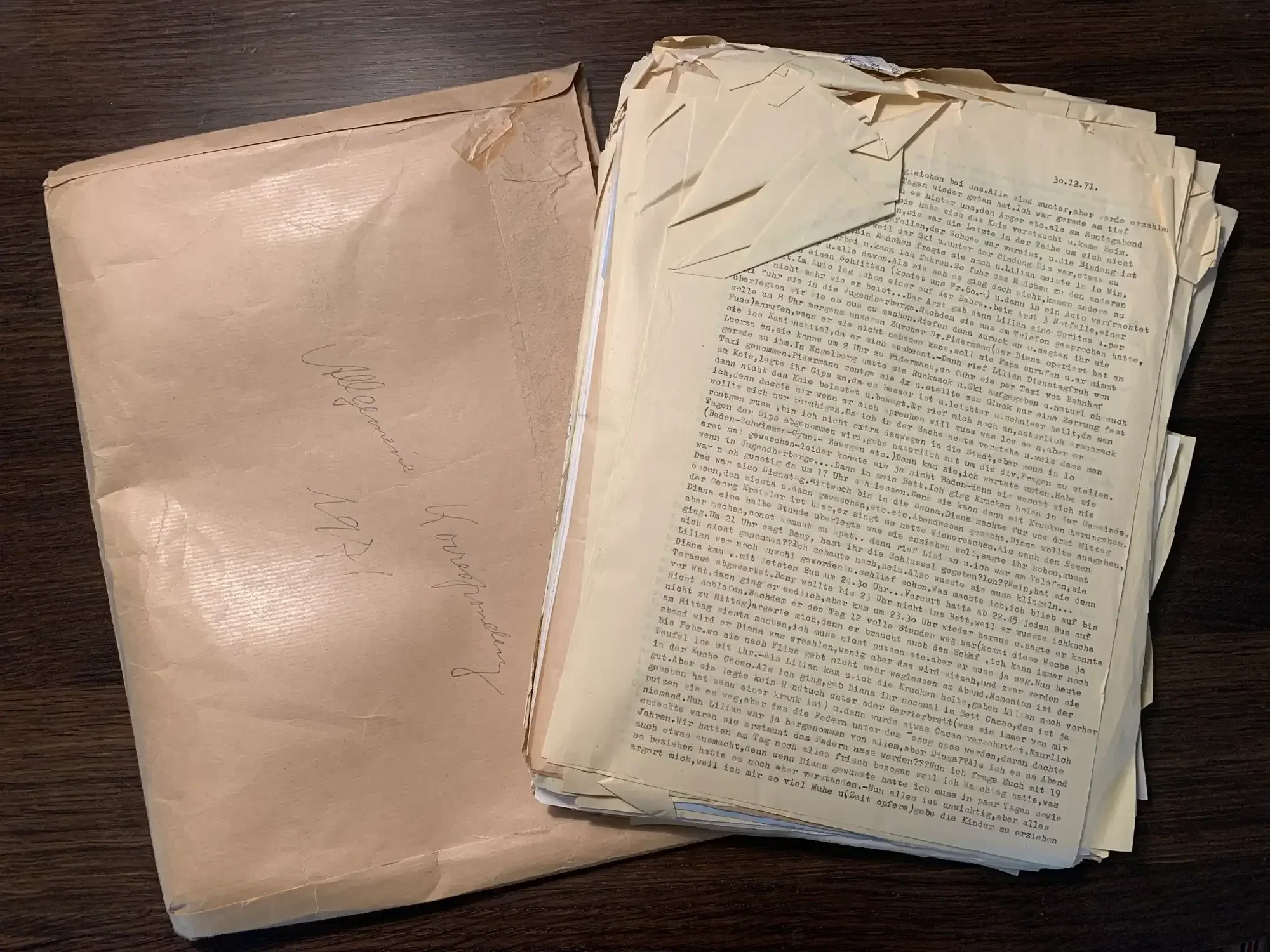
Two brief insights into archival practice: Paper clips reliably rust after about 30 years. They should be removed. To ensure that the relationship between documents is not lost, appropriate insert folders are used. Dust penetrates many types of packaging and leaves traces behind. These can often be gently removed with the right materials. For delicate or damaged originals, it is advisable to seek a professional assessment.
Remove a paper clip
Removing a Rusty Paper Clip (18 seconds). The video shows the careful removal of a metal paper clip from a historical document and the subsequent treatment of the affected area.
Dry Cleaning
Dry-cleaning a historical postcard (11 seconds). The video shows the careful dry-cleaning of the surface of a handwritten postcard.
-
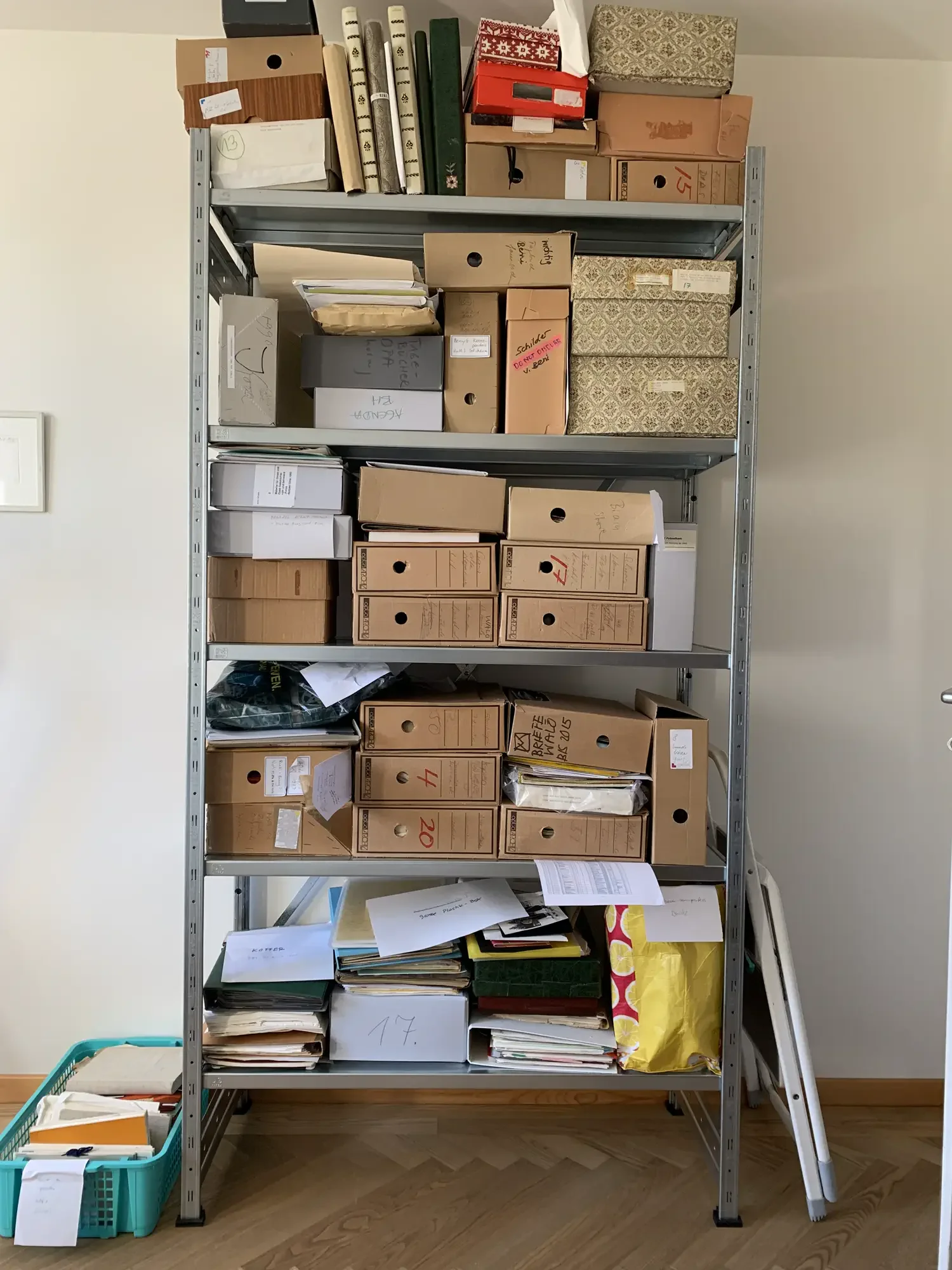
![A disorganized archive shelf with loose folders and boxes, before being properly organized.]()
Shelf before
Archival materials are often stored in unsuitable containers. Corrugated cardboard provides a good nesting environment for insects and should be avoided.
-
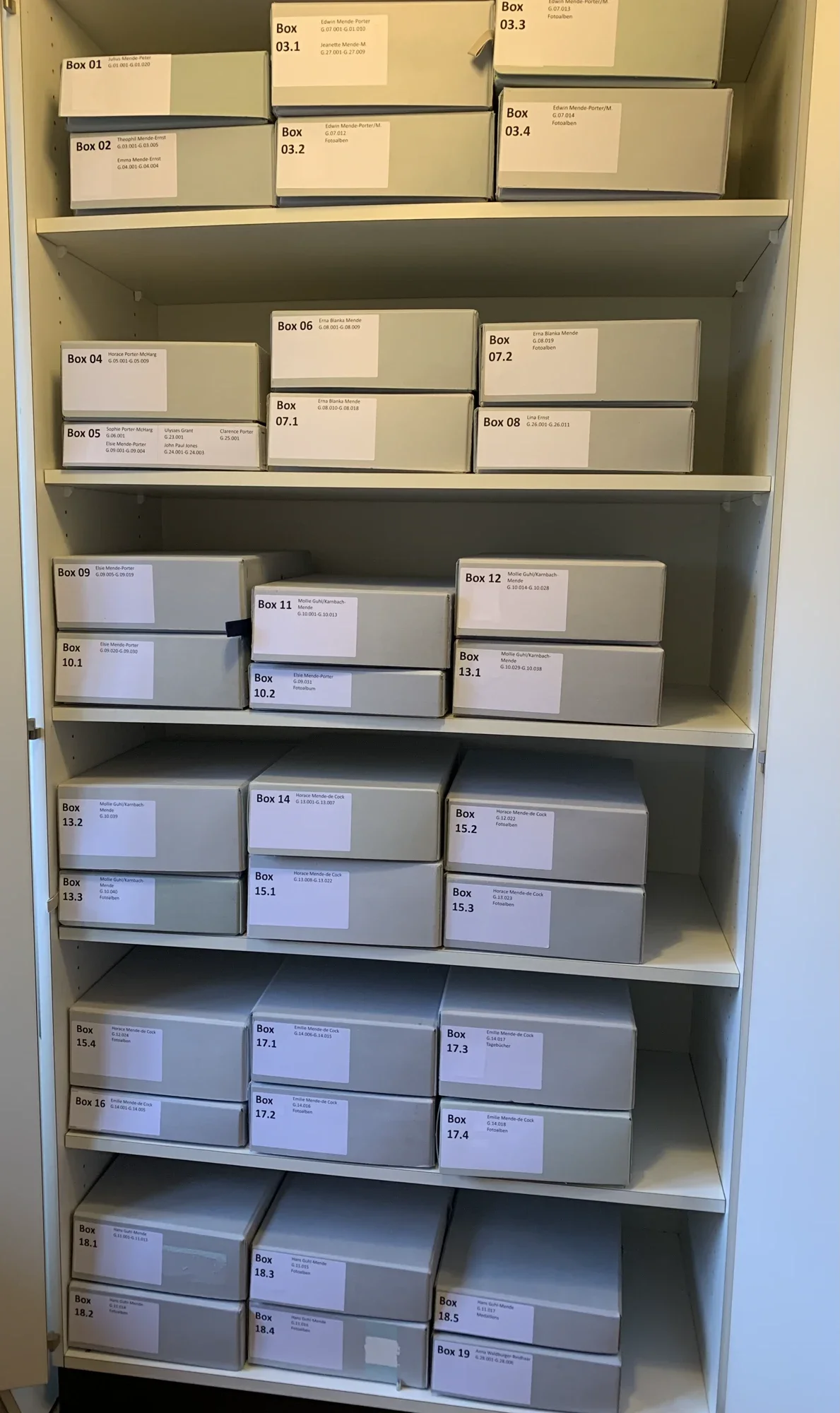
![A neatly organized archive shelf with labeled archive boxes, arranged according to proper cataloging and storage procedures.]()
Shelf after
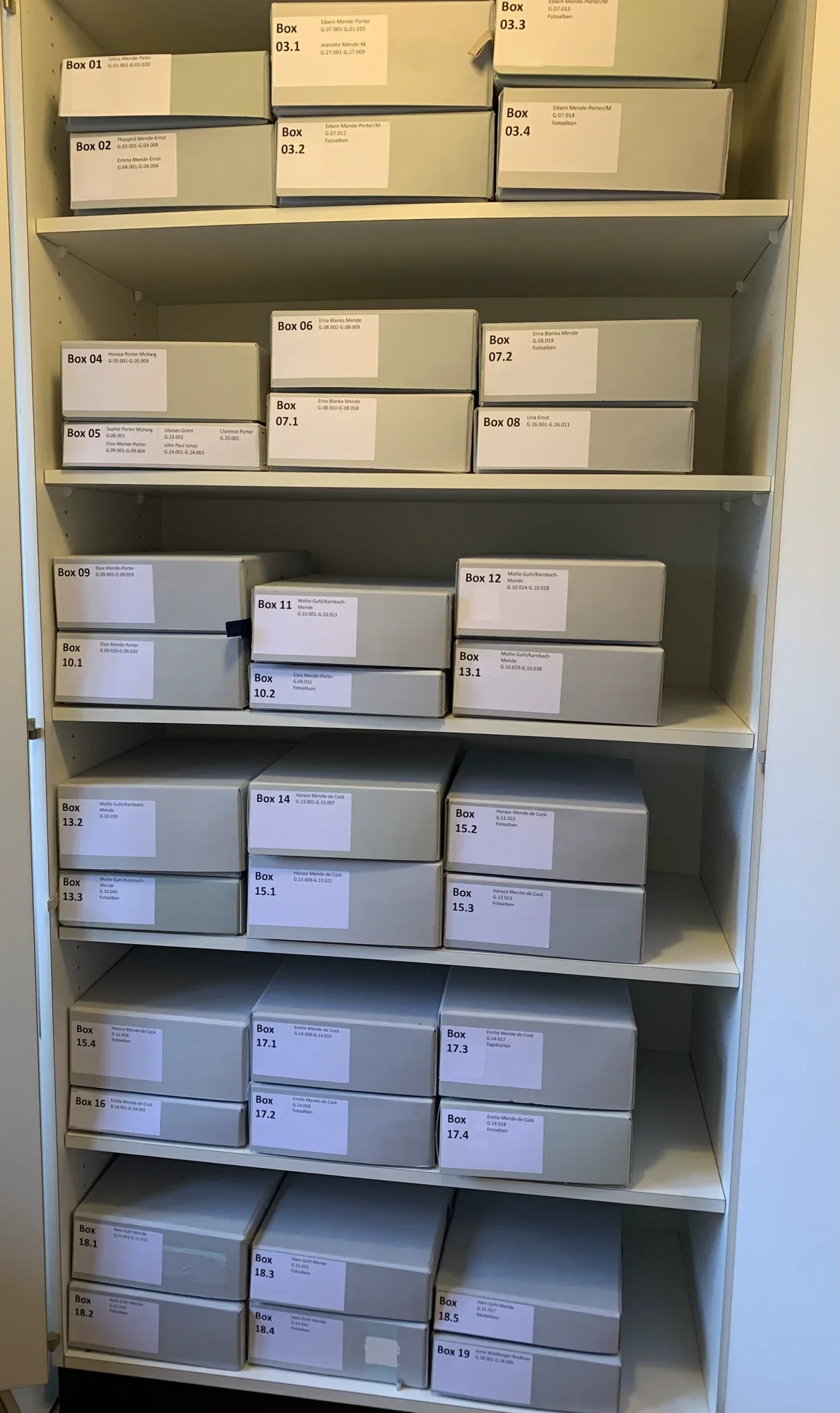
Securely packaged and organized in a way that makes them easy to locate: in what is known as a “visual archive,” you can find documents even without consulting the index.
-
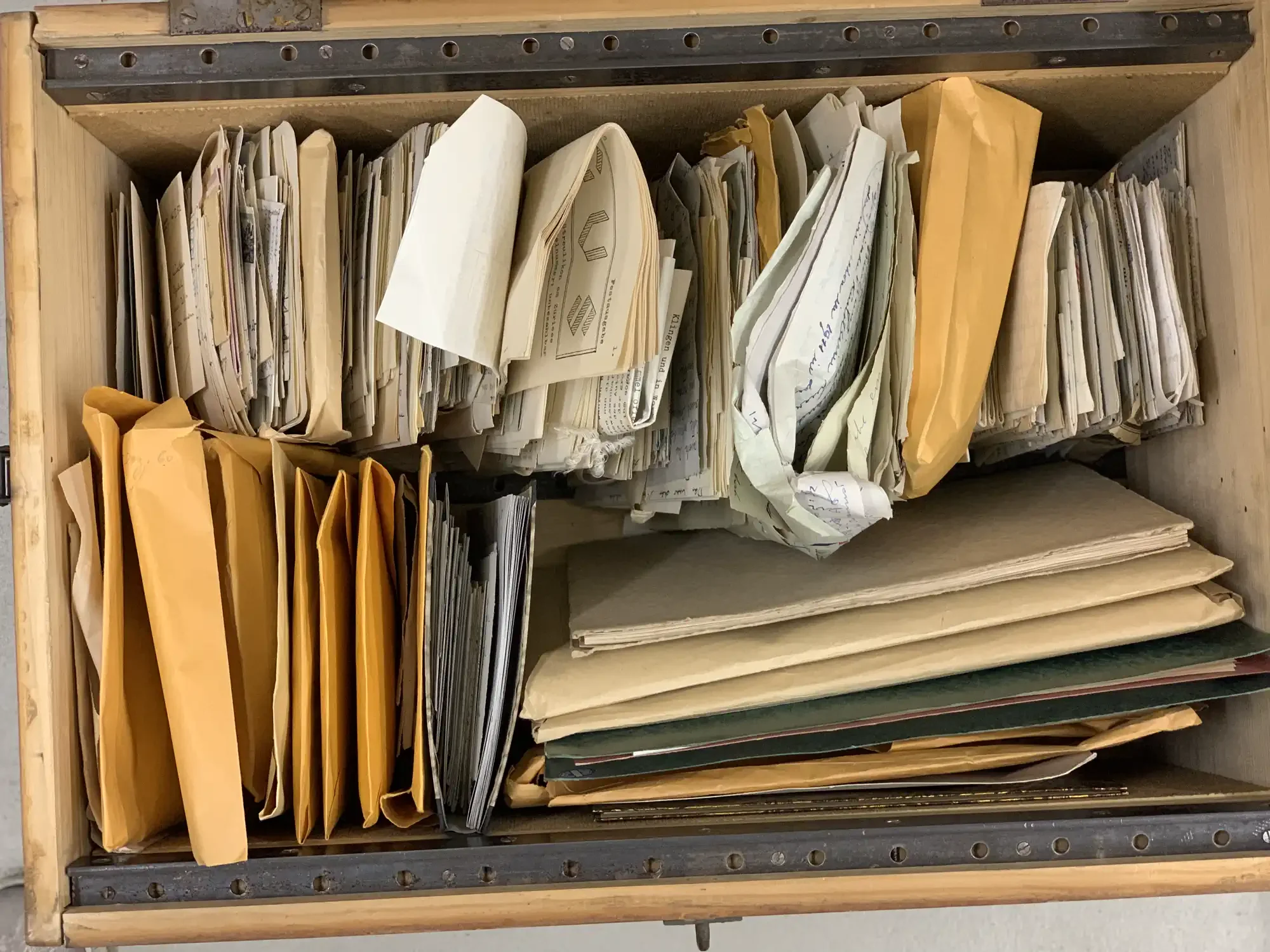
![Unsorted documents in an open storage bin, awaiting proper archiving.]()
Dig Box
Often, whatever boxes happen to be on hand are used for storage. In such cases, the archival materials are identifiable only to the person who packed them.
-
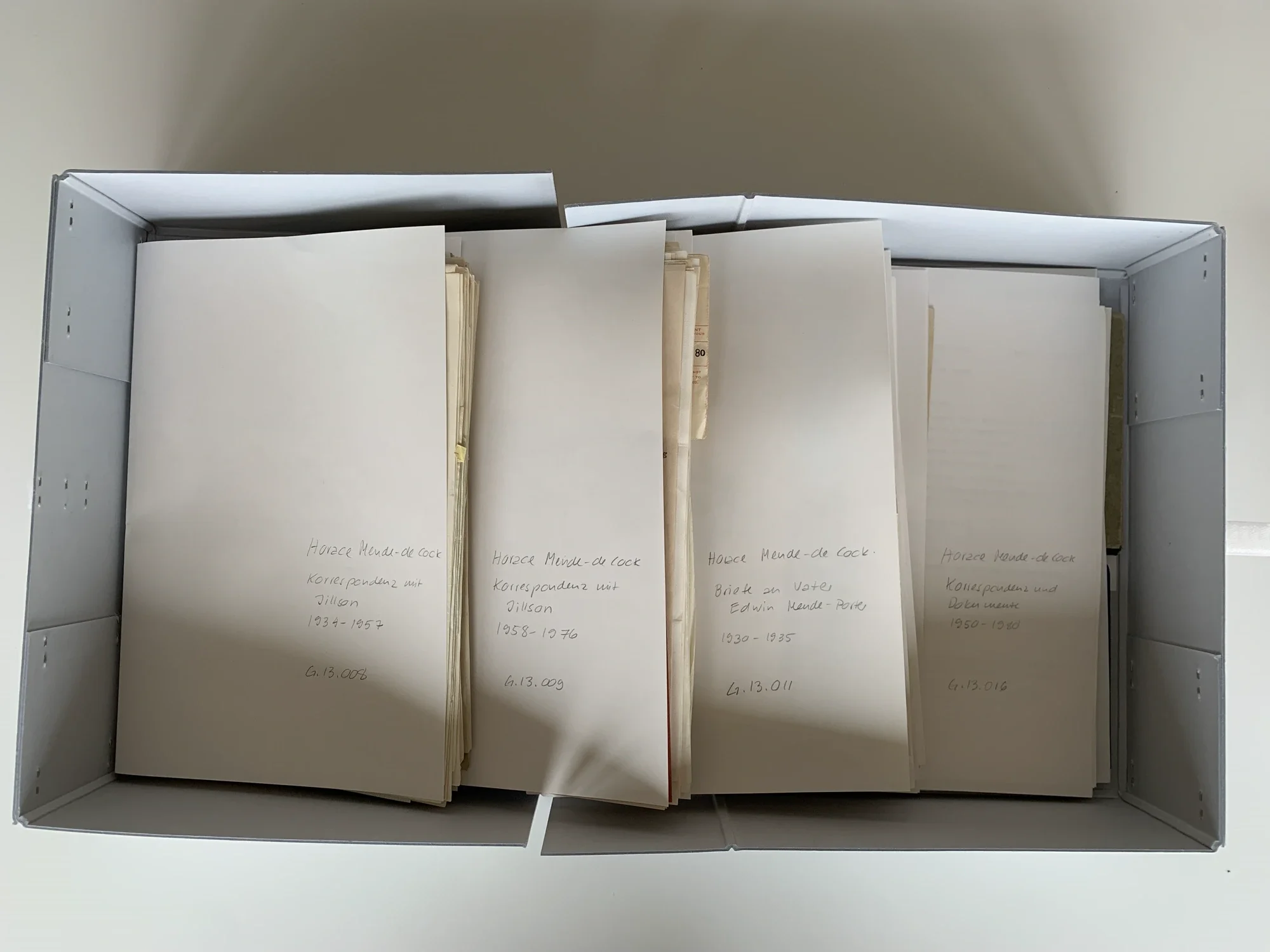
![Organized documents in a labeled archive box following proper archiving procedures.]()
Archive Box (formerly Wühlbox)
Archival materials have been secured, organized into dossiers, labeled, and stored in an age-resistant archival box.
-
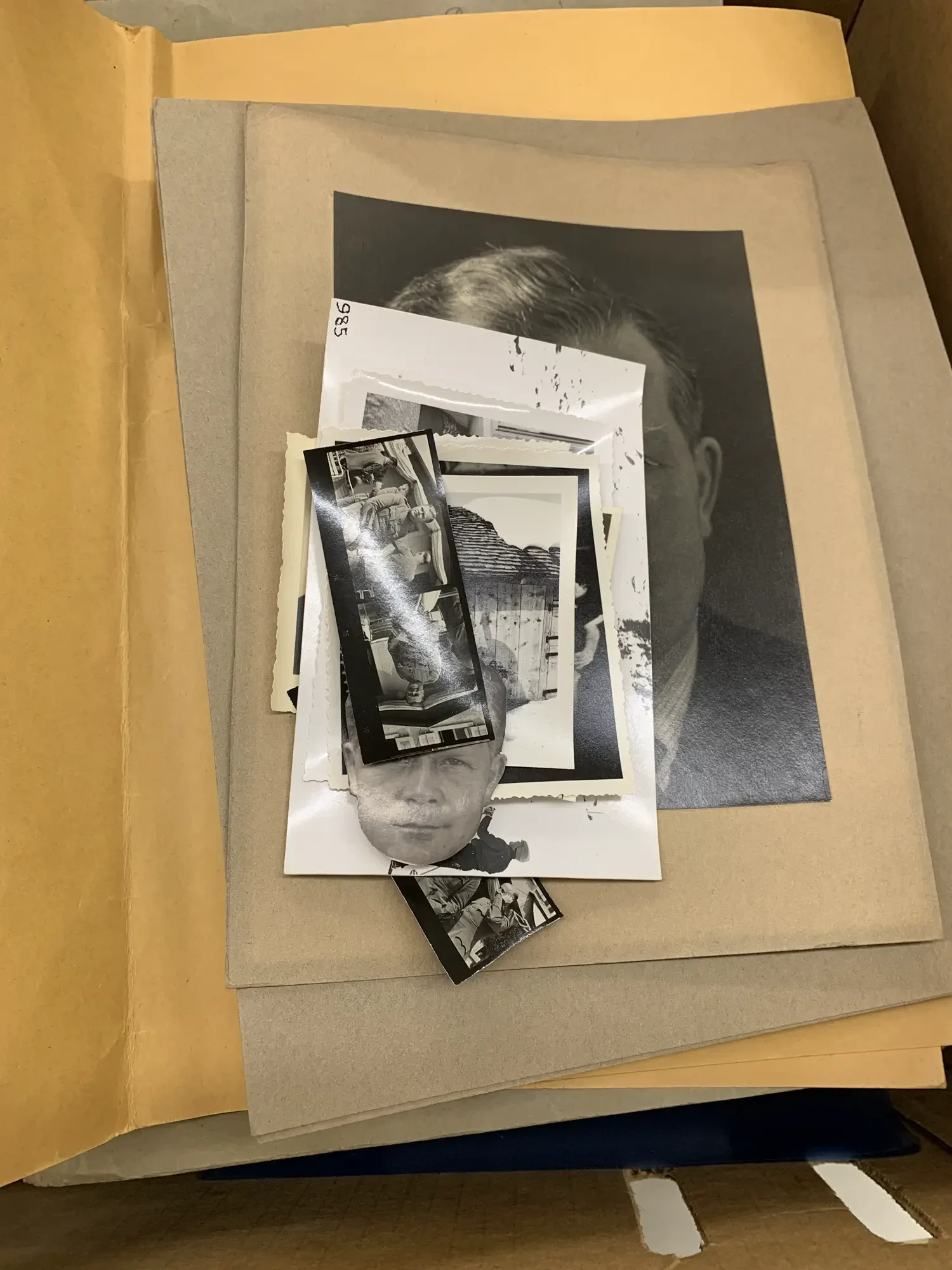
![Loose historical photographs without protective sleeves prior to conservation treatment.]()
Photographs unprotected
They can react chemically with other materials; fingerprints left when touched cannot be removed.
-
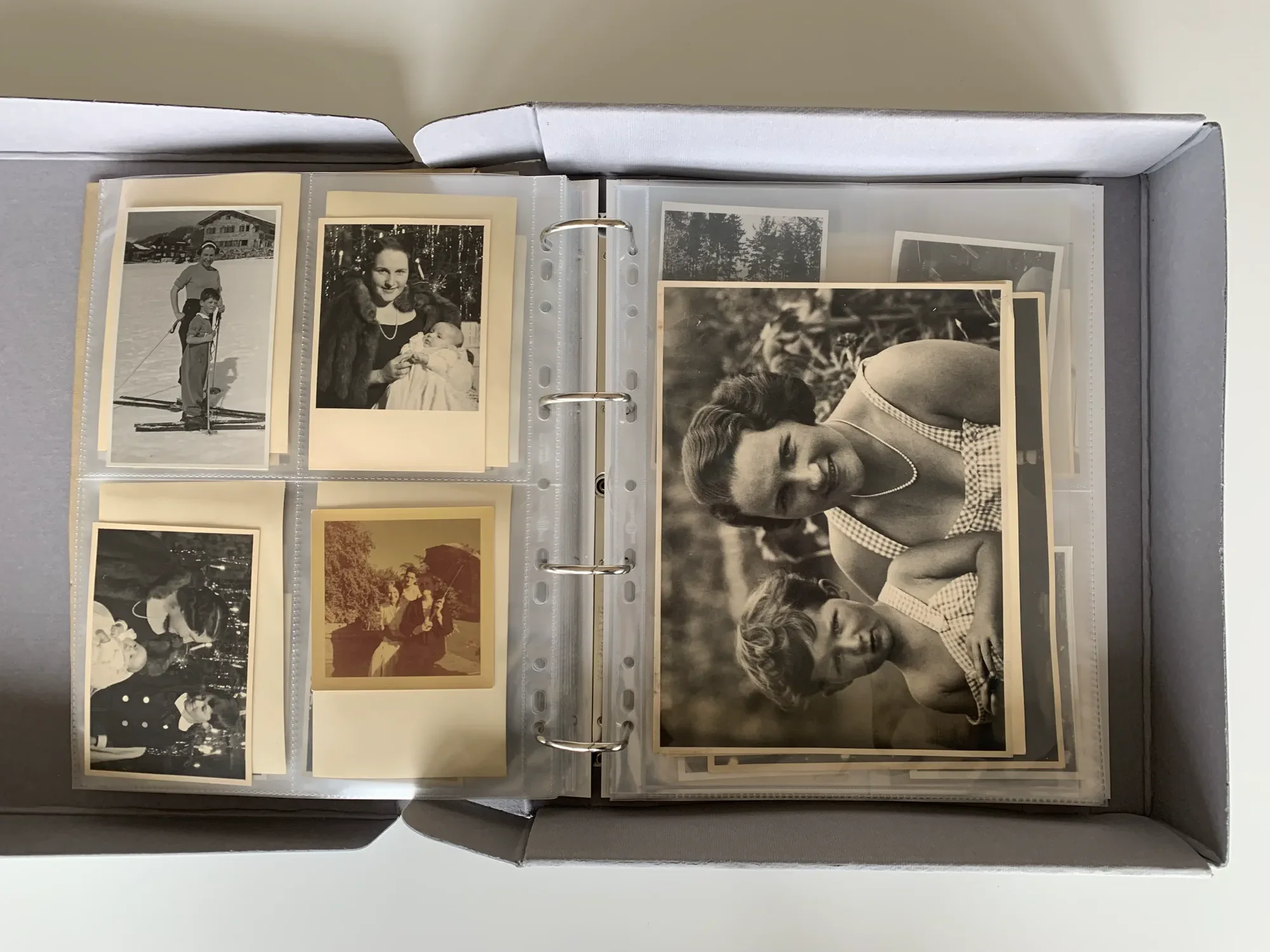
![Historical photographs are protected in archival-quality sleeves and stored in an organized manner.]()
Photographs are protected
Packaged in special archival-quality display sleeves, they can be viewed without being damaged.
-
![Archival documents with creased corners before being gently smoothed out.]()
Dog-eared
A common sight in archives: Papers are stored in an unsuitable manner, which can cause dog-ears, for example.
-
![Historical documents with gently smoothed paper corners following conservation treatment.]()
Flattened Documents
Documents are archived flat; dog-ears are smoothed out.
Are your documents truly protected for the long term?
In a brief, free initial consultation, we'll assess the current situation, set goals, and determine the best next steps.