Things to Know About Personal Archives
Practical guides, templates, and direct answers—drawn from my work with archival materials and private collections. You can now find news and project reports under “Projects.”
Frequently Asked Questions (FAQ)
Practical Guides
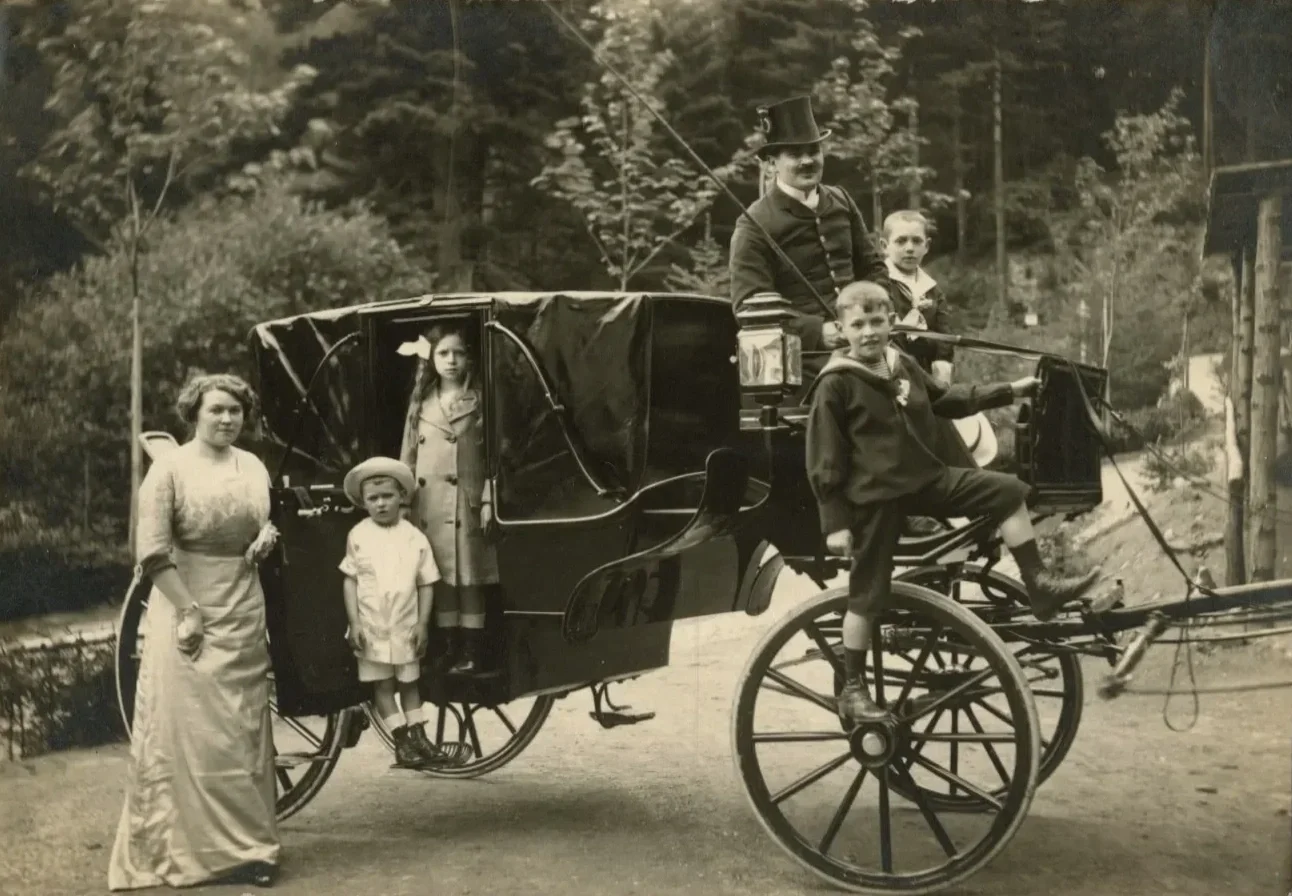
Family outing in a brand-new carriage. Photographer unknown, ca. 1900.
Frequently Asked Questions – Answered Right Away
-
A family archive is the collection of a family's history that has grown over a long period of time. It may include letters, photographs, diaries, documents, business records, films, audio recordings, and digital files.
-
Seeking professional help is worthwhile when the volume of material, disorganization, risk of damage, illegible handwriting, or a goal of publication exceed your own capabilities. Even a quick assessment of the condition of the materials can help you set priorities.
-
Start with an overview, not by sorting individual sheets. Temporarily number the containers, take photos of their condition, and note their origin, approximate time period, contents, and any identifiable risks.
-
Store documents in a cool, dry, clean place, protected from light, and under stable conditions. Damp basements, hot attics, exterior walls with condensation, and direct sunlight are not suitable.
-
First, protect people and buildings; if possible, stop the source of the water; and document the damage. Do not leave wet documents in piles, and do not tear them apart without a plan.
Can't find the answer you're looking for?
In a brief, free initial consultation, we'll assess the current situation, set goals, and determine the best next steps.